

aRTEFACT OF THE mONTH
October 2026
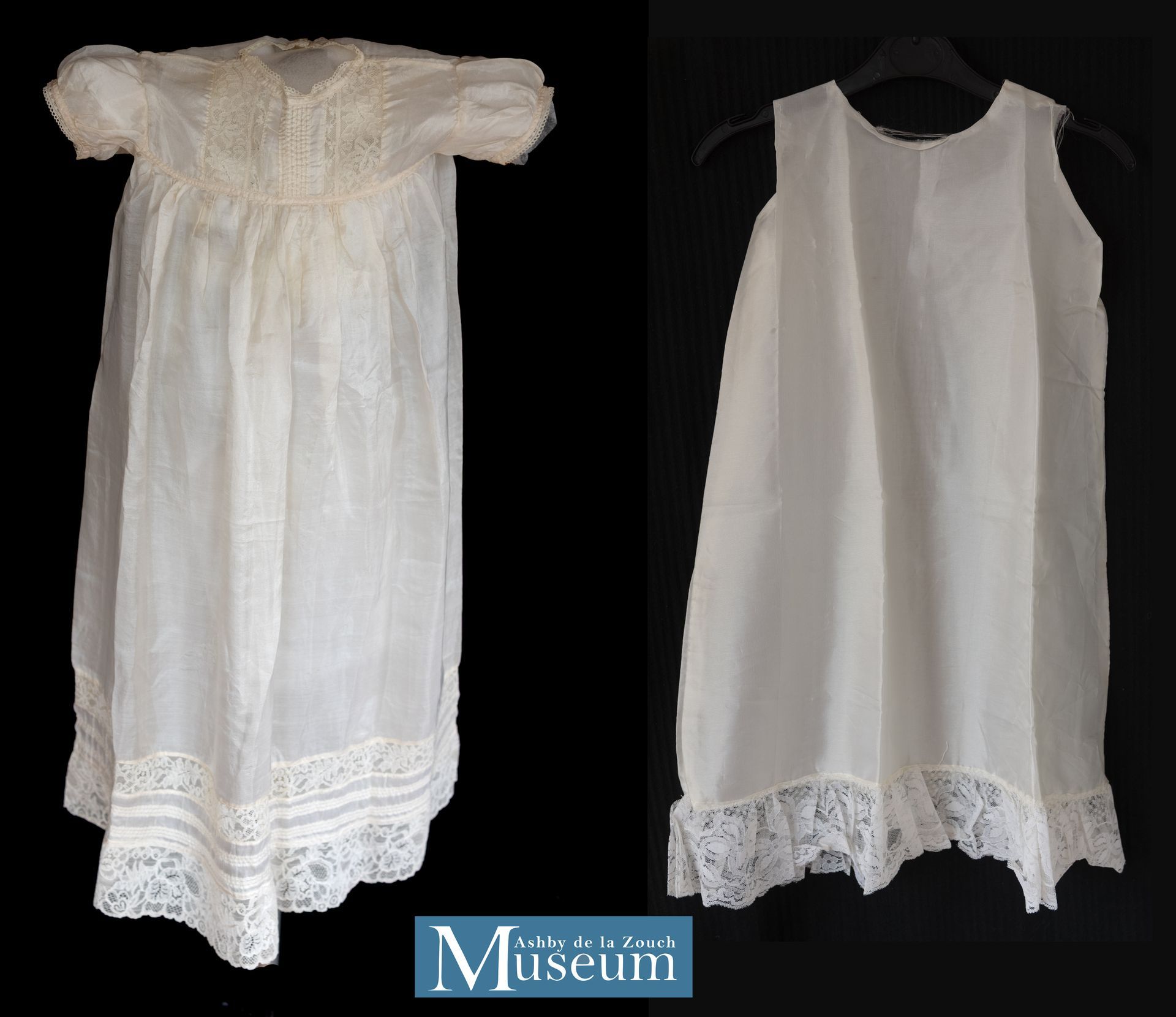
An Ashbeian’s Christening Gown
This gown was used in the christening of Dennis Harold Robinson, who was born in Ashby on 17th September 1921. His father was George William Robinson (1876-1960) and his mother was Florence née Wressell (1874-1956). Both parents died at Scunthorpe in Lincolnshire. Before the Second World War, he was an apprentice painter and decorator. Dennis joined the Royal Army Service Corps and was posted to Ottley, where he met and married Vera Catherine Leonard (1924-2016) on 11 th December 1943. In 1941, he was an ammunition driver and went to France, Belgium, Holland and Germany. After the War, he was a builder and, finally, for years was a postman before retiring.
Their daughter, Pearl Denise Robinson was born on 3rd January 1947 in Burley in Wharfedale, Yorkshire. The same christening gown was used in her christening service. She died on 8th December 2025. Her daughter Lisa has kindly donated both the original christening gown (now 105 years’ old at least) and the underskirt her mother was christened in (now 80 years old) to the Museum.
The christening gown as we know it today is largely a product of the 19th century. The Victorian era, with its emphasis on family, sentimentality, and elaborate social rituals, elevated the christening ceremony to a major life event.
The christening gown and underskirt were chosen as our Artefact of the Month for October by Janet Barwood, a volunteer and trustee of the Museum.
ARTEFACT OF THE MONTH
September 2026
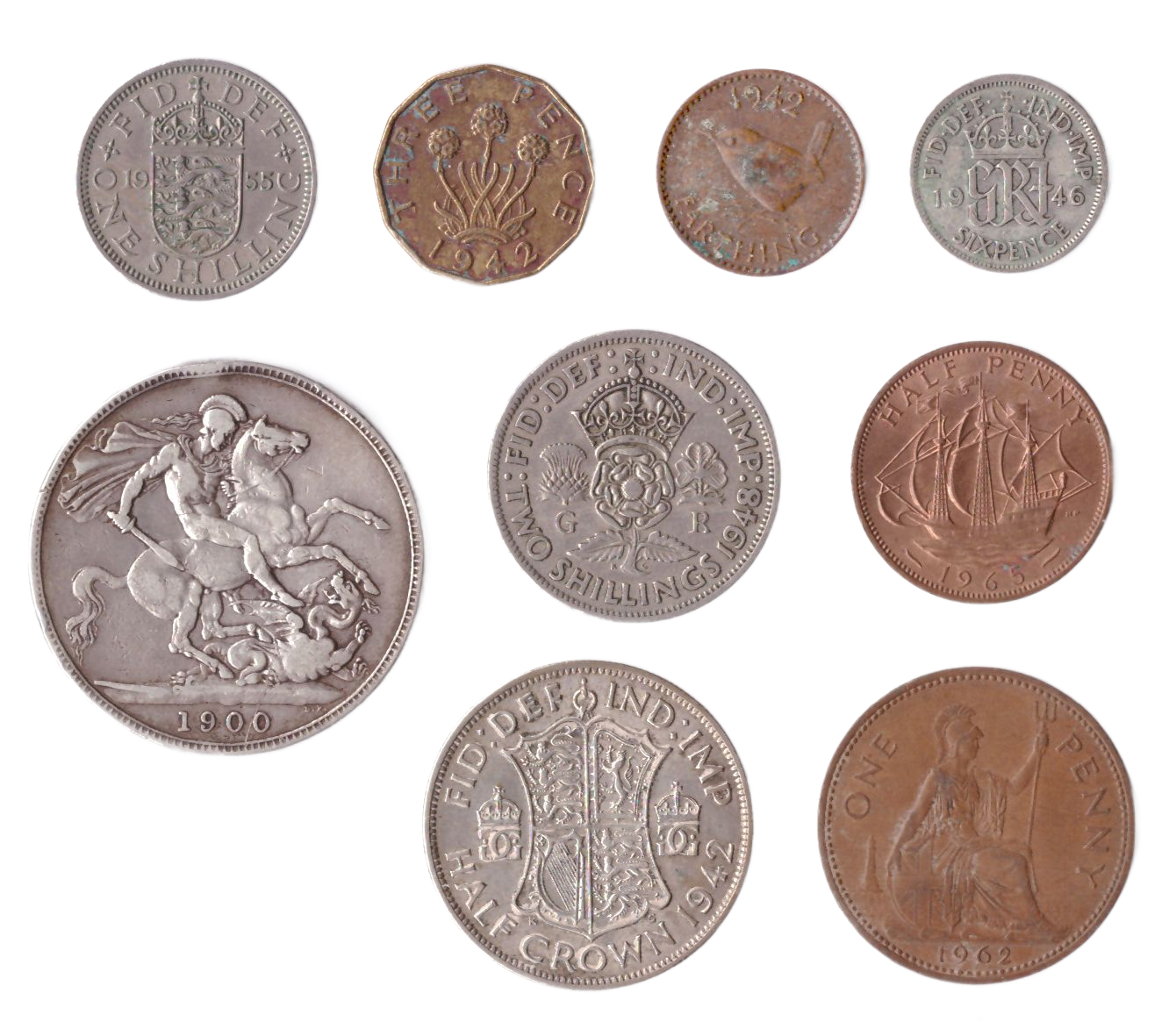
Pre-Decimal Currency (1900-1960s)
At Ashby Museum we have many coins within our collection. This month’s artefact consists of a selection of coins which represent the pre-decimal coinage that was in circulation prior to the changeover date of Monday 15th February 1971. The plan to change the currency system was first announced on March 1st 1966 by James Callaghan, who was chancellor at the time.
- Farthing (pictured coin dated 1942): the value of which was a quarter of a penny. This coin was removed from circulation in the 1960s.
- Halfpenny (pictured coin dated 1965): the value of which was half a penny.
- Penny (pictured coin dated 1962): of which there was 240 in £1. The penny dates back to the Anglo Saxon period. Originally the value of the penny was tied to the literal weight of silver - 1 pound of silver equalling 240 pence.
- Threepence (pictured coin dated 1942): this coin was known as the threepenny bit, and there were 80 in £1.
- Sixpence (pictured coin dated 1946): this coin was known as a tanner. There were 40 in £1.
- Shilling (pictured coin dated 1955): this coin was known as a bob. There were 20 in £1.
- Florin/Two Shillings (pictured coin dated 1948): this coin was known as a two bob. There were 10 in £1.
- Half Crown (pictured coin dated 1942): equated to two Shillings and sixpence to which there were 8 in £1. This coin was demonetised in 1970.
- Crown (pictured coin dated 1900): this was a non-circulating coin normally given to children during a Coronation. It was known as five bob of which there were 4 in £1.
From this point the currency changed to paper notes: a ten shilling note (ten bob note), a one pound note, and a five pound note.
The currency was difficult to add up in pounds, shillings, and pence. Foreign visitors in particular found it very confusing, and could be exploited by taxi drivers and shopkeepers. Our current decimal system seems much simpler in comparison! Do you have memories of using any of these coins?
ARTEFACT OF THE MONTH
August 2026
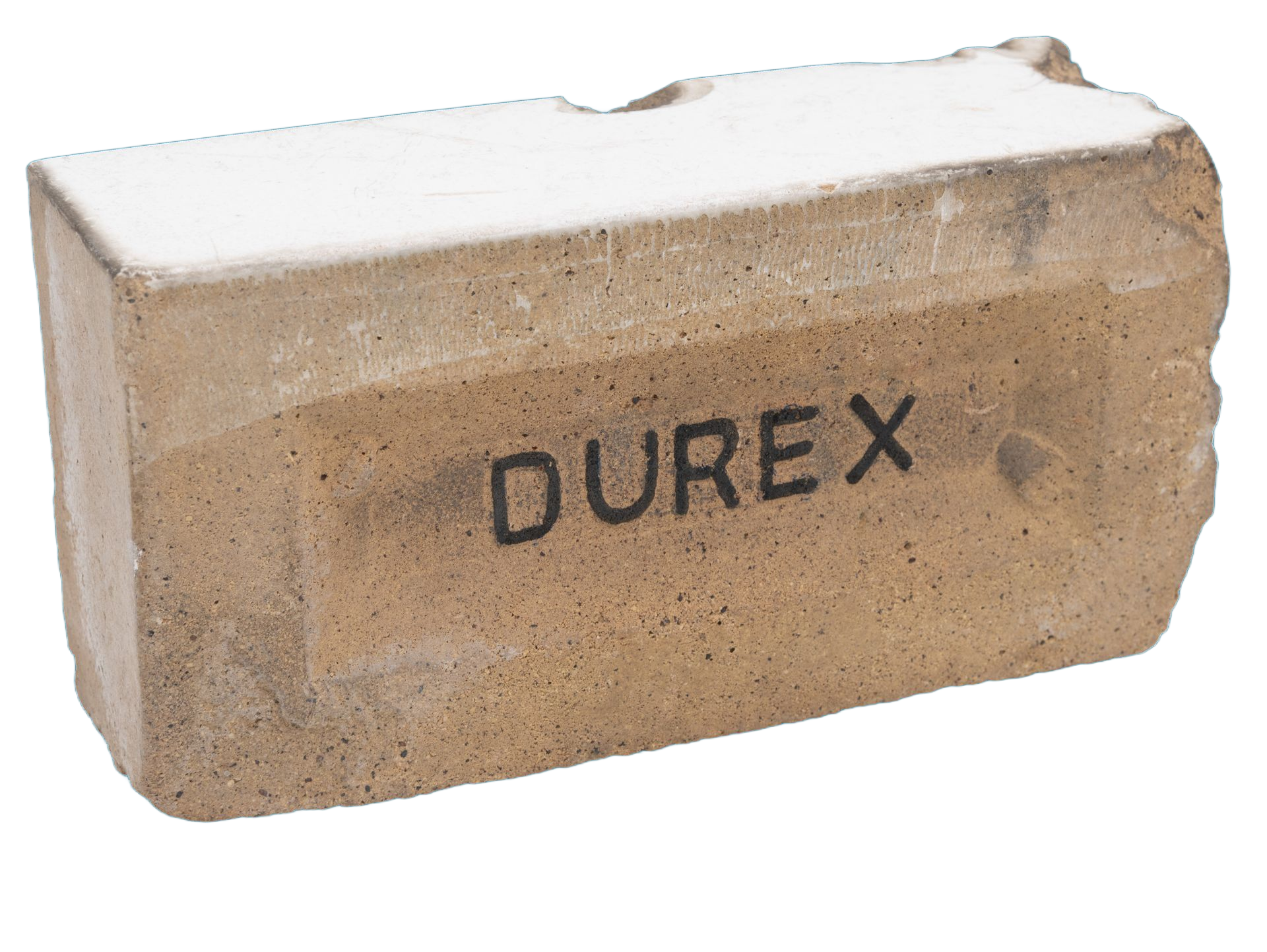
Glazed brick made by Stanley Bros. Ltd (c.1900s)
In the early 1900’s, Stanley Bros. Ltd. opened a new brickyard (No.5), in the Bermuda district of Nuneaton, using clay from the nearby Newdigate Colliery.
Often the bricks, like the one above, were white glazed on one side, and were designed to be used in places where ease of cleaning was an important factor. These bricks were used in the construction of places including bakeries, kitchens, hospital theatres, and toilet blocks.
Stanley Bros. Ltd. decided they needed a registered trademark that could be applied to their bricks to create a distinctive brand. The name ‘Durex’ is believed to come from an amalgamation of the words DURability and EXcellence which were used in sales catalogues to describe the bricks’ qualities.
The ‘Durex’ trademark was accepted and approved by the ‘Office for Patents, Designs and Trade Marks’ in London with the Certificate of Registration, No. 251663, issued in April 1903. This was initially valid for 14 years from 22nd January 1903 but later extensions kept it valid until about 1967.
In 1929 a similarly named trademark was registered by The London Rubber Company. This was permitted at the time as the trademarks were for different classes of items!
This brick was rescued from a public toilet demolition in Worksop, Nottinghamshire.
ARTEFACT OF THE MONTH
July 2026
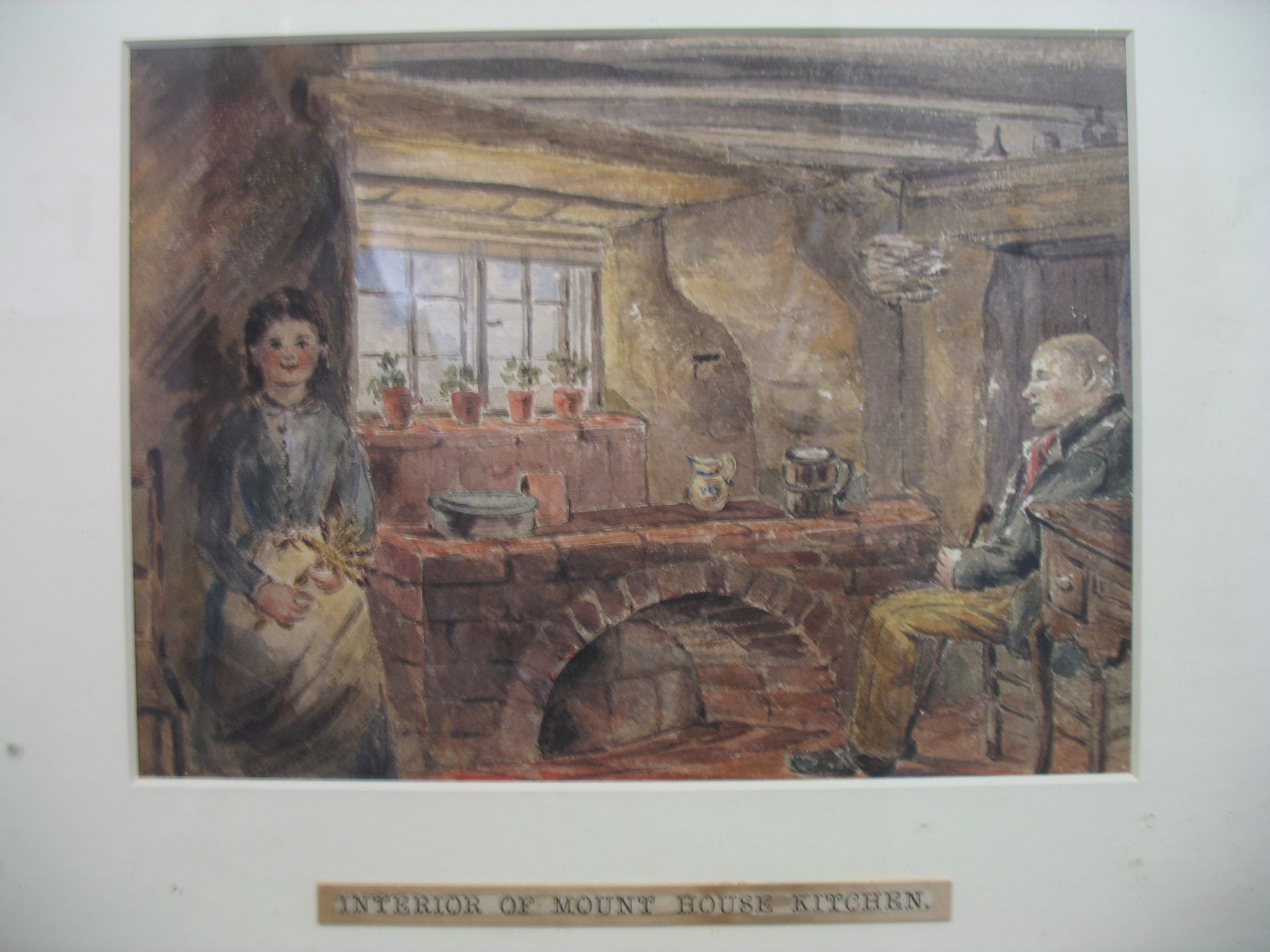
Painting of the Interior of Mount House Kitchen (1800s)
This month we are featuring one of the many paintings that can be found within Ashby Museum’s collection. This painting of the kitchen within Mount House hangs on one of the walls on the museum, and has been chosen by Kenneth Hillier who has "long admired the, admittedly vernacular but pleasingly domestic, painting."
The triangular lodge now known as the Mount House is situated about 170 yards (155 metres) to the east of Ashby Castle. The two storey building of stone was probably erected during the17th century Civil War to be a forward post or lookout on the Leicester Road approaches. It was also called the Irish Fort. A Parliamentary letter of November 1644 stated: "there are also many Irish there, who have lately made a new fort, a very strong work, and it is called the Irish
fort... "An equilateral triangle, each side measuring 36 feet (11 metres), it may well have been surrounded by earthworks or mounds, hence its nickname. These were levelled at the start of
the 19th century. An Ashby Guidebook of 1824 includes a plan showing the subterranean passage which linked the fort to the main castle kitchen. Parts of the tunnel had already fallen in by then; its course could be traced as recently as 1983, when the Grammar School sports hall was built.
ARTEFACT OF THE MONTH
June 2026
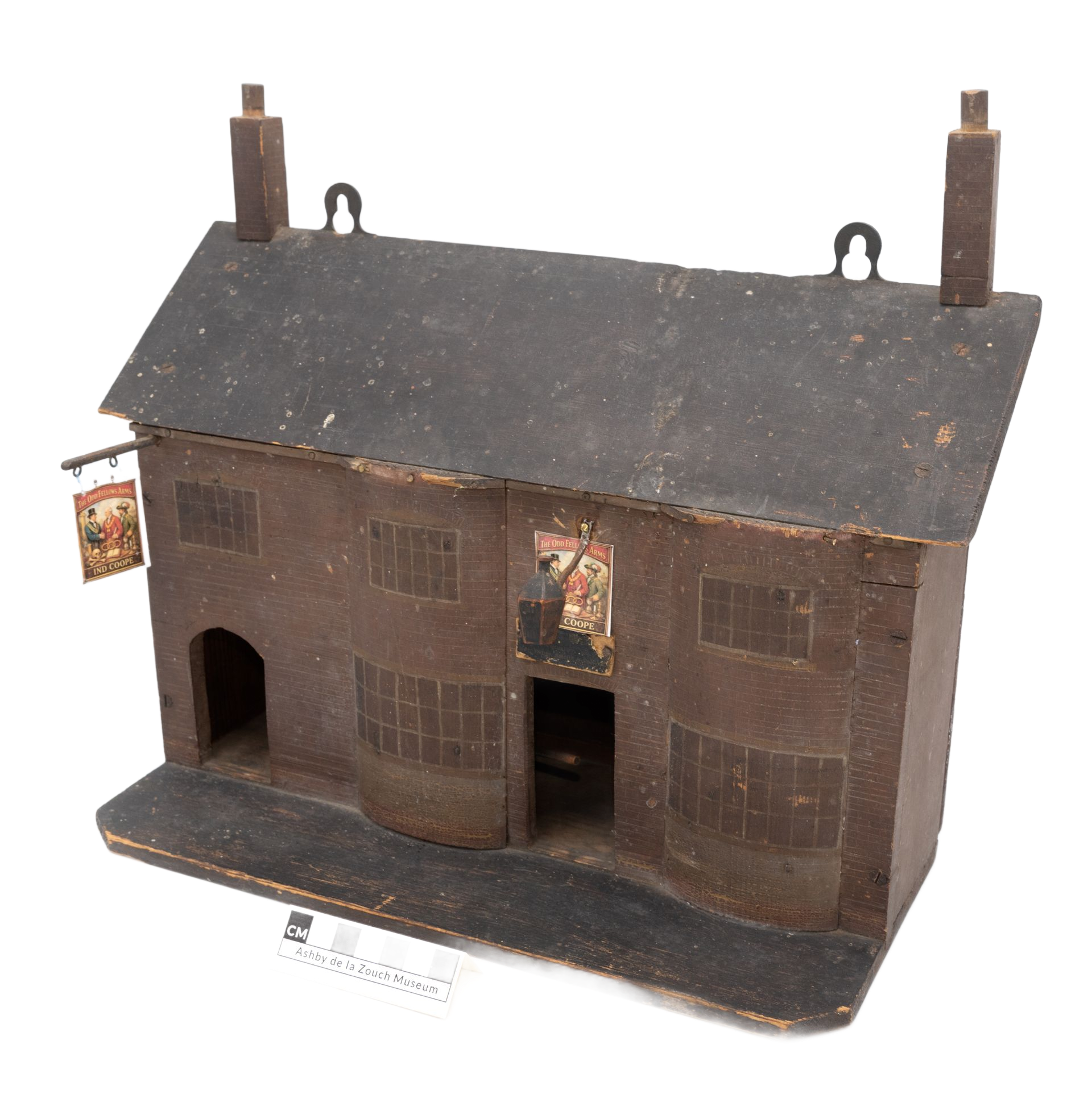
Model of The Oddfellows Arms (c.1900s)
This month’s artefact is one of the museum’s most recent acquisitions: a handmade model of The Oddfellows Arms (demolished in the 1950s) that was located on Kilwardby Street.
This model is believed to be made by one of the owners of the pub, Charles Cutter, who also worked as a cabinet maker, coffin maker, paper hanger, and even as a clerk for the parish
council.
According to records a pub first stood in this location at least as far back as 1835 when Thomas Halton was listed as being the landlord of the Plumbers’ Arms. By 1861 the pub had been
renamed as The Oddfellows Arms. Publicans over the years included James Wright (c.1861-1867, died 1871), William Sikes (c.1876-1877, died 1878), and Ellen Sykes (c.1880), with Charles
Cutter coming into ownership of The Oddfellows Arms in 1881. Charles owned the pub for several years up to 1908 before moving to 70 Market Street.
According to records Charles would appear to have been the last owner of the pub, as in subsequent trade directories after 1908 the Oddfellows Arms was no longer listed in the section on public houses, suggesting that the pub had ceased to be in operation.
ARTEFACT OF THE MONTH
May 2026
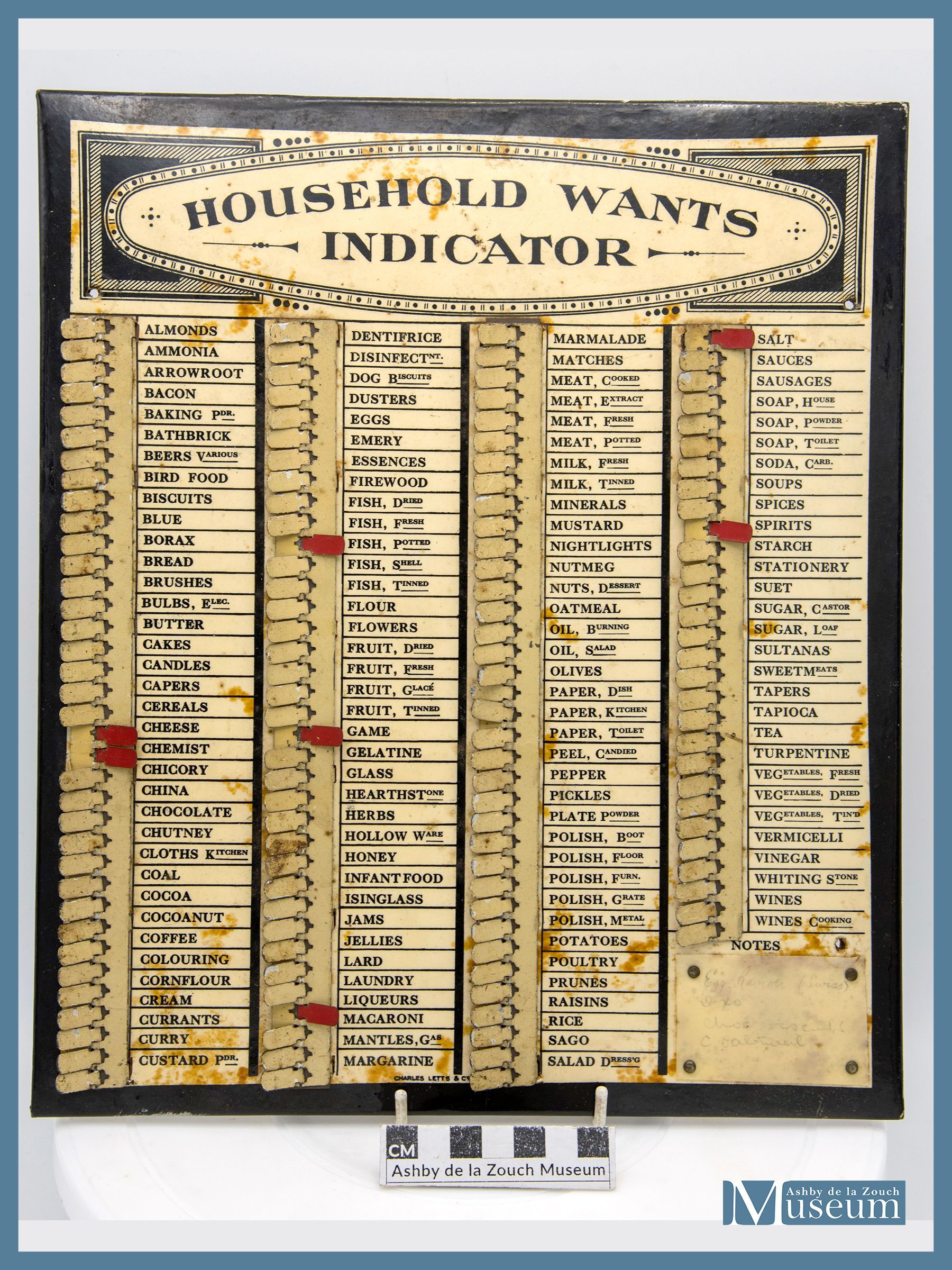
Household Wants Indicator (c.1920s-1930s)
This useful household item has been chosen by volunteer Richard Stevenson, who is a core member within our artefact department.
Designed to hang on a wall, this metal chart alphabetically lists various household items and has tabs that can be flipped to mark which items are needed. This object was made by Charles Letts & Co. and was even patented (patent no. 192924). Some of the more unusual items on the list include: hollowware (serving dishes, pots, etc.); Vim (likely referring to a scouring powder produced by William Lever); whiting stone (made from chalk and used for cleaning); and dentifrice (paste or powder products for teeth cleaning).
According to Richard: "I just thought it to be an excellent way to replace items that you have run out of simply by highlighting the red marker and not having to write notes on paper. It is also fascinating to see how times have changed and some of the items listed people would not recognise today."
ARTEFACT OF THE MONTH
April 2026
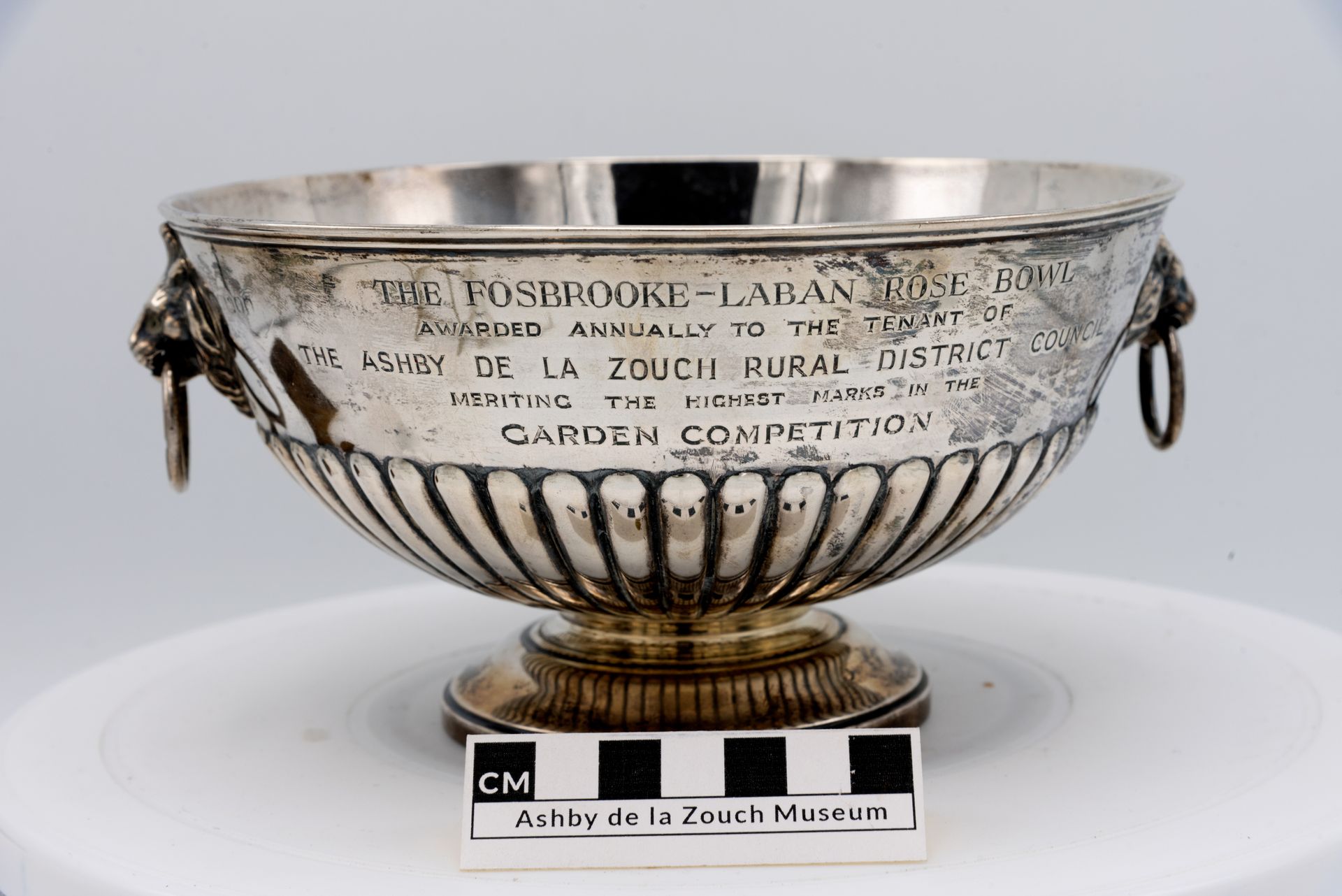
The Fosbrooke-Laban Rose Bowl Gardening Trophy (1954)
This month’s artefact has been chosen by one of our front of house volunteers, Pam Redfern, who enjoys a spot of gardening when she is not busy welcoming visitors to the museum.
This silver hallmarked trophy was awarded by Ashby Rural District Council to the resident who had achieved the highest overall mark in the annual gardening competition. The competition first took place in 1954 and as well as awarding trophies also offered prizes of up to £3 for the best gardens. The trophy itself was named after two former chairmen of the council, Joseph Bird Laban and Mary Cicely Fosbrooke (who was also the last squire of Ravenstone).
According to Pam: "It would be lovely to win such an award…although my garden wouldn’t win as I garden the way I like to…not for anyone else!"
ARTEFACT OF THE MONTH
March 2026
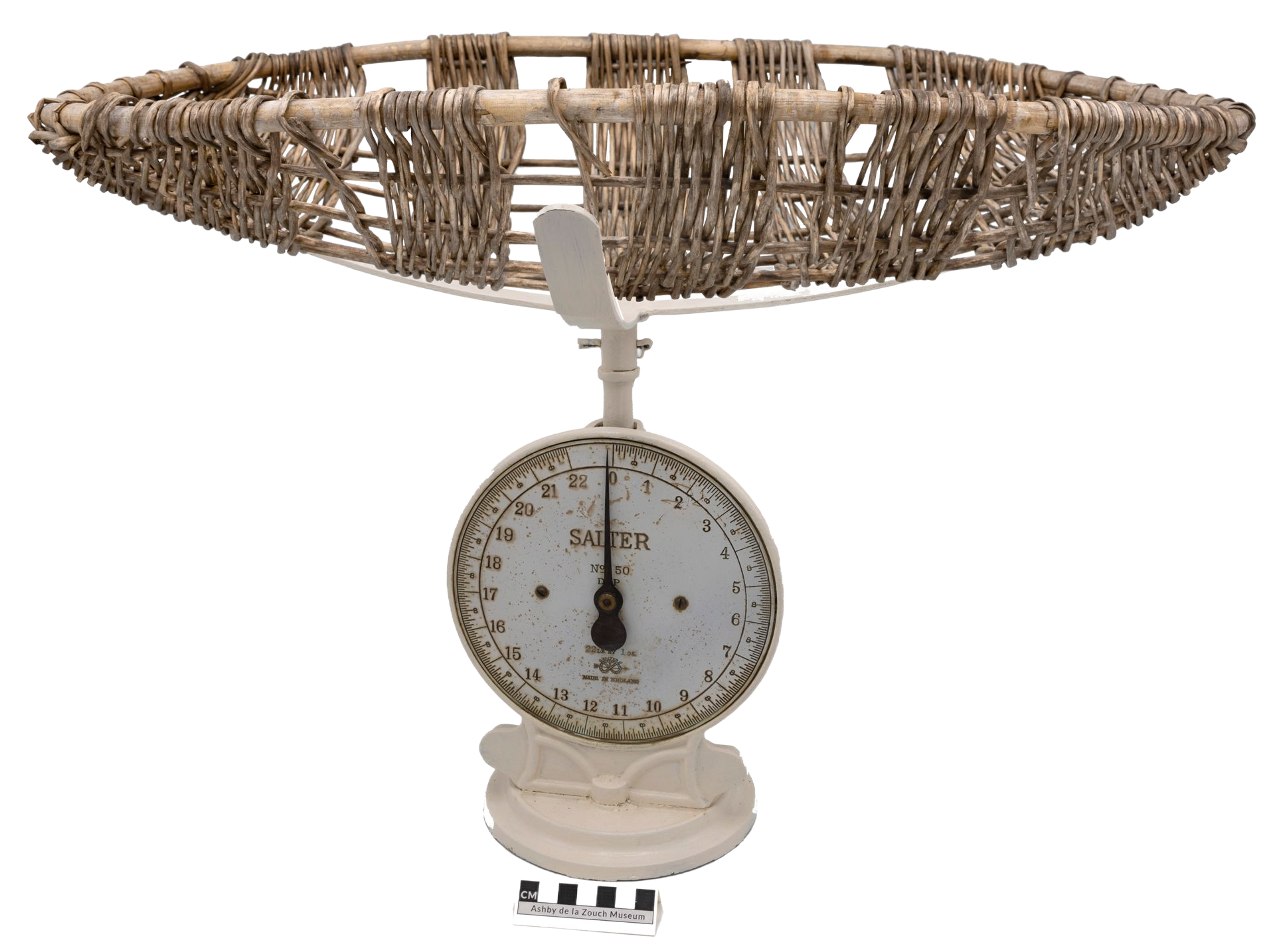
Baby Weighing Scales (c. 1940s-1960s)
These may look like a set of ordinary kitchen scales (albeit with a larger basket than normal), however these scales were used to weigh babies at Jones’ Chemist on Market Street. The emergence of the practice of routinely weighing babies to monitor their growth dates back to the nineteenth century. Whilst there is evidence that babies have been weighed for centuries, it was during this period that an increasing number of medical studies began to recommend the practice.
From 1836 to 2022, the premises at 57 Market Street was continuously operated as a chemist shop by a number of different owners. Between 1943 and 1990, the Jones family ran the shop, gradually expanding into the adjacent shop at number 55. Over the years, many babies would have been weighed there – perhaps you were one of them!
ARTEFACT OF THE MONTH
February 2026
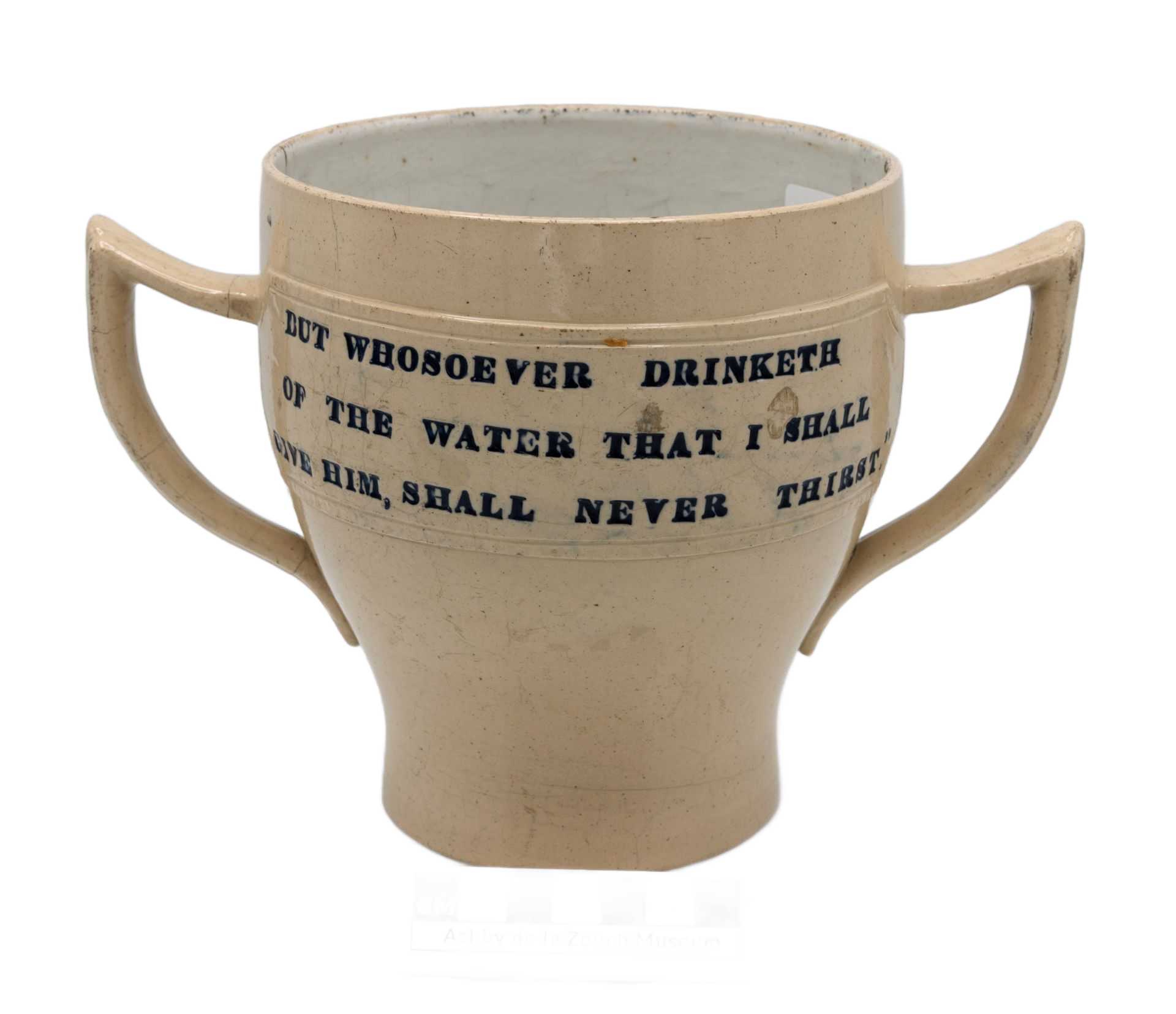
‘Love Feast’ cup (1800s)
This cup, featuring a biblical quote from John 4:14, was used during ‘Love Feast’ meetings at the Primitive Methodist Chapel in Mill Lane (now C. J. Lewis Printers) during the nineteenth century. In these meetings Methodists would gather together for a spiritual sharing of religious prayer and testimony, and a communal meal of bread and water. Participants would drink from Love Feast or loving cups which could easily passed between one another using the two handles.
The origins of the Love Feast can be traced back to the early Christian Church. Its revival within the Methodist movement in Britain during the nineteenth century drew its inspiration, in part, from the practices of the Moravian Brethern in Germany. The Love Feast was an important feature of early Primitive Methodism that brought the community together to develop their faith as they learnt from each other’s spiritual experiences and stories of the work of God in their lives.
The first Primitive Methodist Chapel in Ashby was built in 1833 and was located between the Green and the Callis. As the congregation grew new premises had to be sought and subsequently in 1862
the Mill Lane Chapel was purchased, which itself went on to be replaced in 1906 by the Burton Road Chapel.
ARTEFACT OF THE MONTH
January 2026
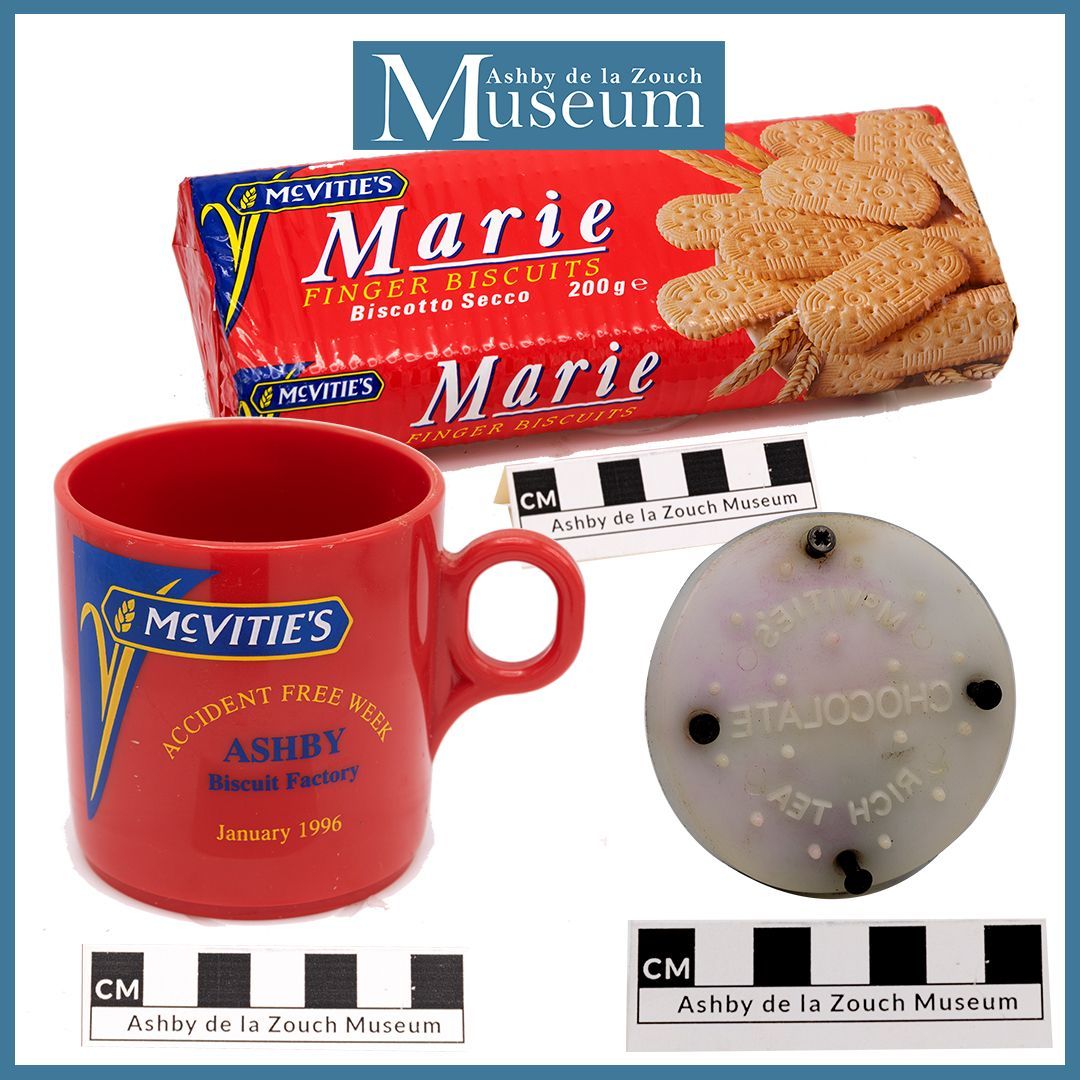
Selection of Artefacts Relating to the McVities Biscuit Factory (1990s-2000s)
This month’s artefact (or rather artefacts) relate to Ashby’s biscuit manufacturing heritage. Biscuit manufacturing was one of the main industries in the town during the 20th century, before the biscuit
factory closed in November 2004.
The selection of items relates to different aspects of the manufacturing process. Health and safety was of great importance within the factory, as this mug awarded to the Ashby factory for a successful accident-free week demonstrates. The mould was used to produce chocolate-covered rich tea biscuits – just one of the many variety of biscuits that would have been made at the factory. The packet of ‘Marie’ biscuits are thought to be part of the last production run in the factory so might be a bit too soft for dunking in your tea!
A biscuit factory was established in Ashby in 1927 by the manufacturers Meredith and Drew. This business was acquired by United Biscuits in 1967, who were also owners of the McVities brand. In 1992, the company opened a distribution centre in Ashby, and this remains in operation, handling over 3 million pallets of product every year.
ARTEFACT OF THE MONTH
December 2025
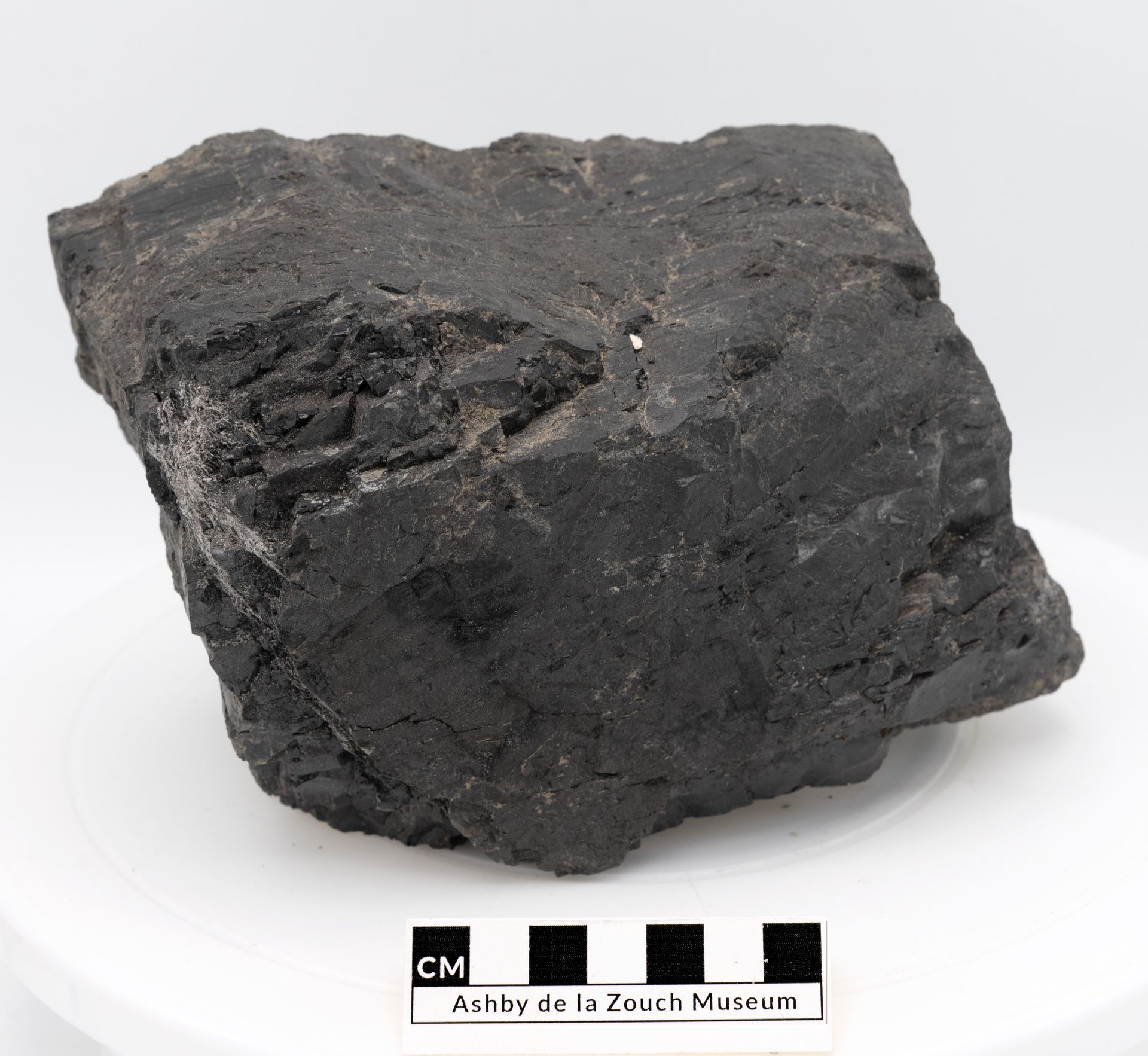
Lump of Coal from Rawdon Pit (1989)
Have you been good this year or will you be receiving a lump of coal in your stocking? The tradition of naughty children receiving coal from a festive figure, such as Father Christmas, is common in
several European cultures. In England It is believed that the tradition began in the 19 th century.
Ashby is situated at the centre of the Leicestershire and South Derbyshire coalfield, although no coal seams are located under the town itself. Here at the museum we have many artefacts related to the history of coal mining which was an important activity for the surrounding area. This piece of coal is thought to have come from Rawdon Colliery in Moira on its last day of production on 1 December 1989. Rawdon Colliery was first sunk in 1821, and despite facing many problems with production during the 19th century, became the last coal mine to close in the local area. The former site of Rawdon Colliery is now home to Conkers outdoor activity centre.
ARTEFACT OF THE MONTH
November 2025
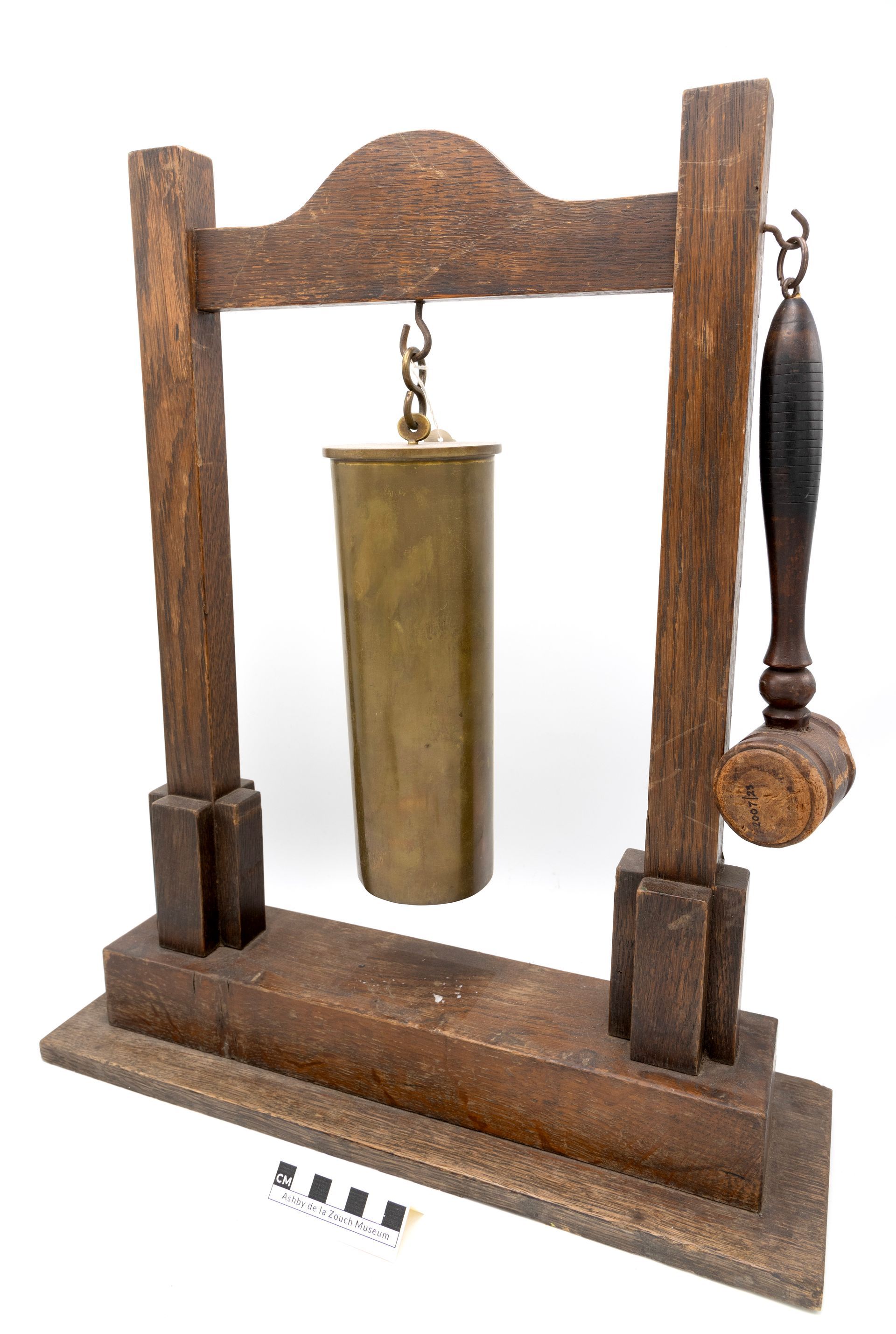
Gong made from a WWII artillery gun shell (1943)
In honour of Remembrance Day, November’s artefact of the month has a military connection. This
gong was used by the Ashby branch of the Royal British Legion at their meetings and is made from
an artillery gun shell manufactured in 1943. The markings on the shell tell us that it was designed to
be used with a ‘6-pounder’ (57mm) calibre gun weighing approximately 7CWT (356kg). The shell was manufactured by Edward Curran & Company, Cardiff. The shell was filled with a full charge of cordite which when ignited would produce enough high-pressure gas to propel the ammunition as far as the gun’s maximum range of around 4,600m.
Unfortunately, we do not have any information about where the shell was found or how it came to
be in Ashby. However, the gong is an example of ‘trench art’, a practice whereby soldiers, prisoners
of war, and civilians created decorative or useful items out of war debris, including shell and bullet
casings. Whilst trench art is often associated with WWI, it has been produced in relation to other
conflicts, as was the case with this gong. Such items serve as tangible objects of remembrance,
acting as poignant reminders of the costs of war.
ARTEFACT OF THE MONTH
October 2025
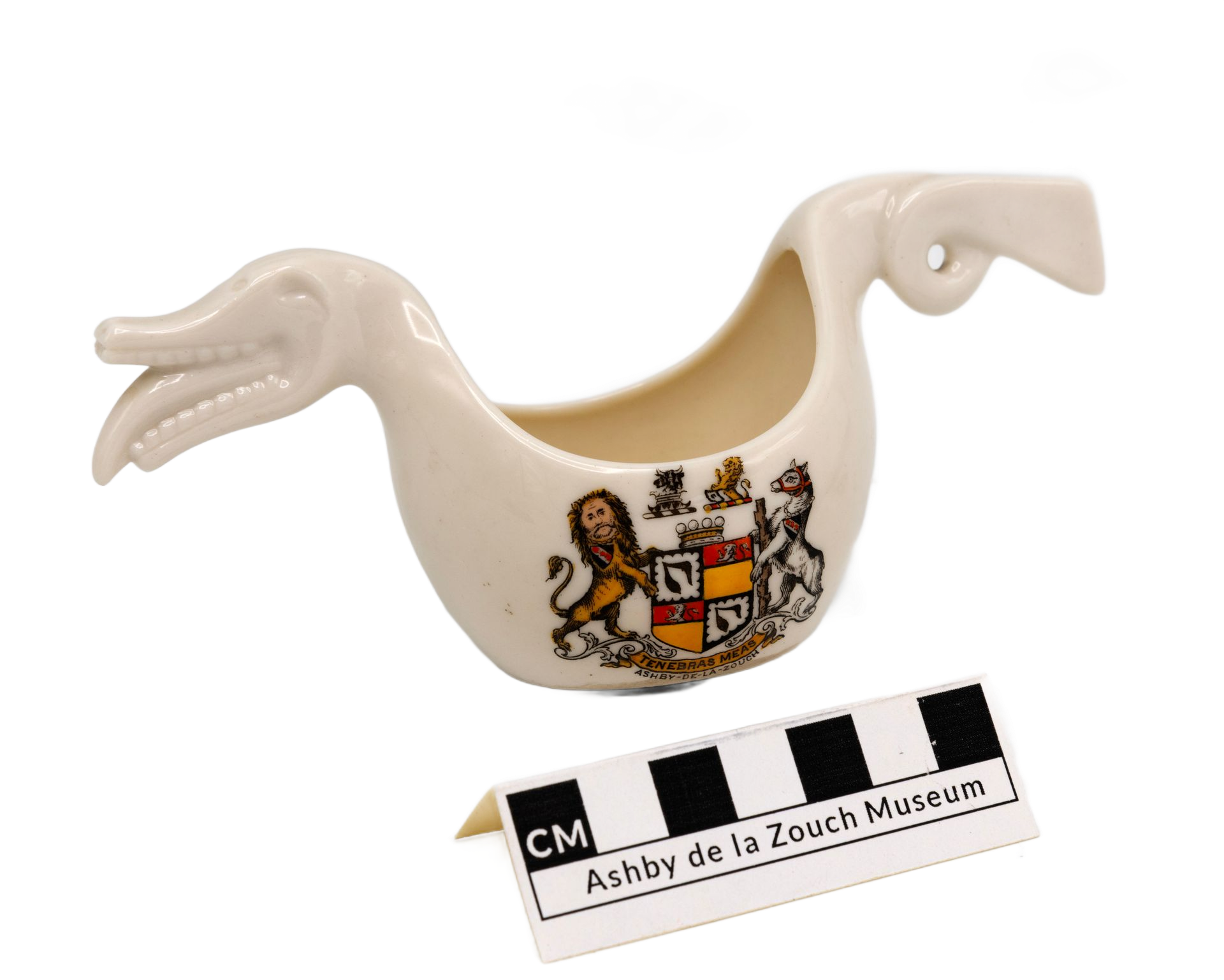
Model of a Norwegian dragon shaped beer bowl (c.1880-1900)
This miniature model of a late medieval (c.1300-1500) Norwegian dragon shaped beer bowl (kane) is
one of several pieces of crested china within the museum’s collection. Such models of historic artefacts and antiquities decorated with a town’s coat of arms were popular souvenirs during the late 19th and early 20th century. This model was made by William Henry Goss (the leading manufacturer of crested china) and was supplied by Thomas Litherland & Co., a china dealer based in Market Street. Thomas was not the only one in the Litherland family to have an interest in china, with both his brother William and his son Henry being involved in the establishment of the Derby Crown Porcelain Company in 1876.
Whilst the Goss factory closed in 1940 following a decline in interest in heraldic porcelain, crested china is still sought after by enthusiasts today, reflecting the enduring appeal of souvenir collecting throughout history.
ARTEFACT OF THE MONTH
September 2025
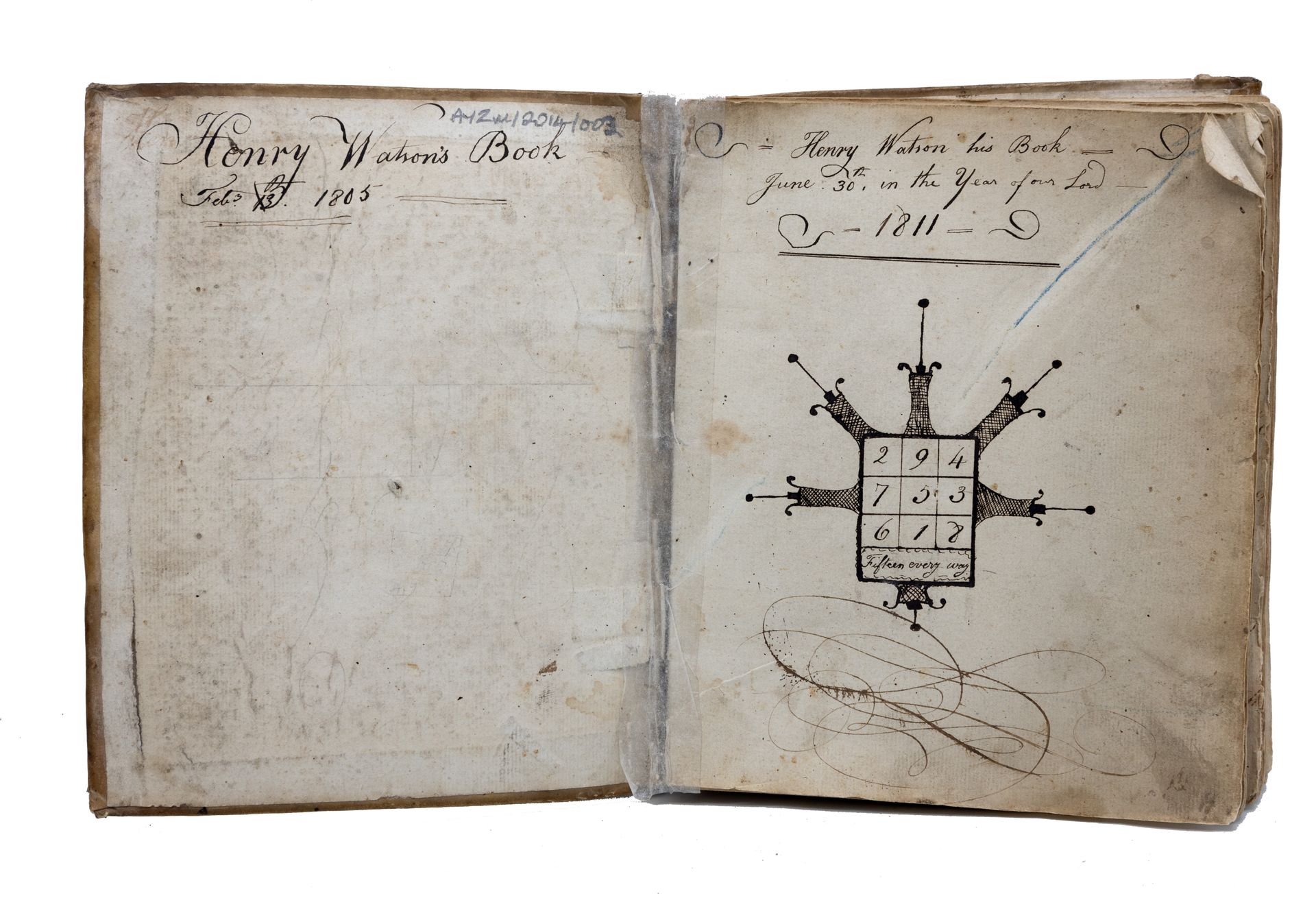
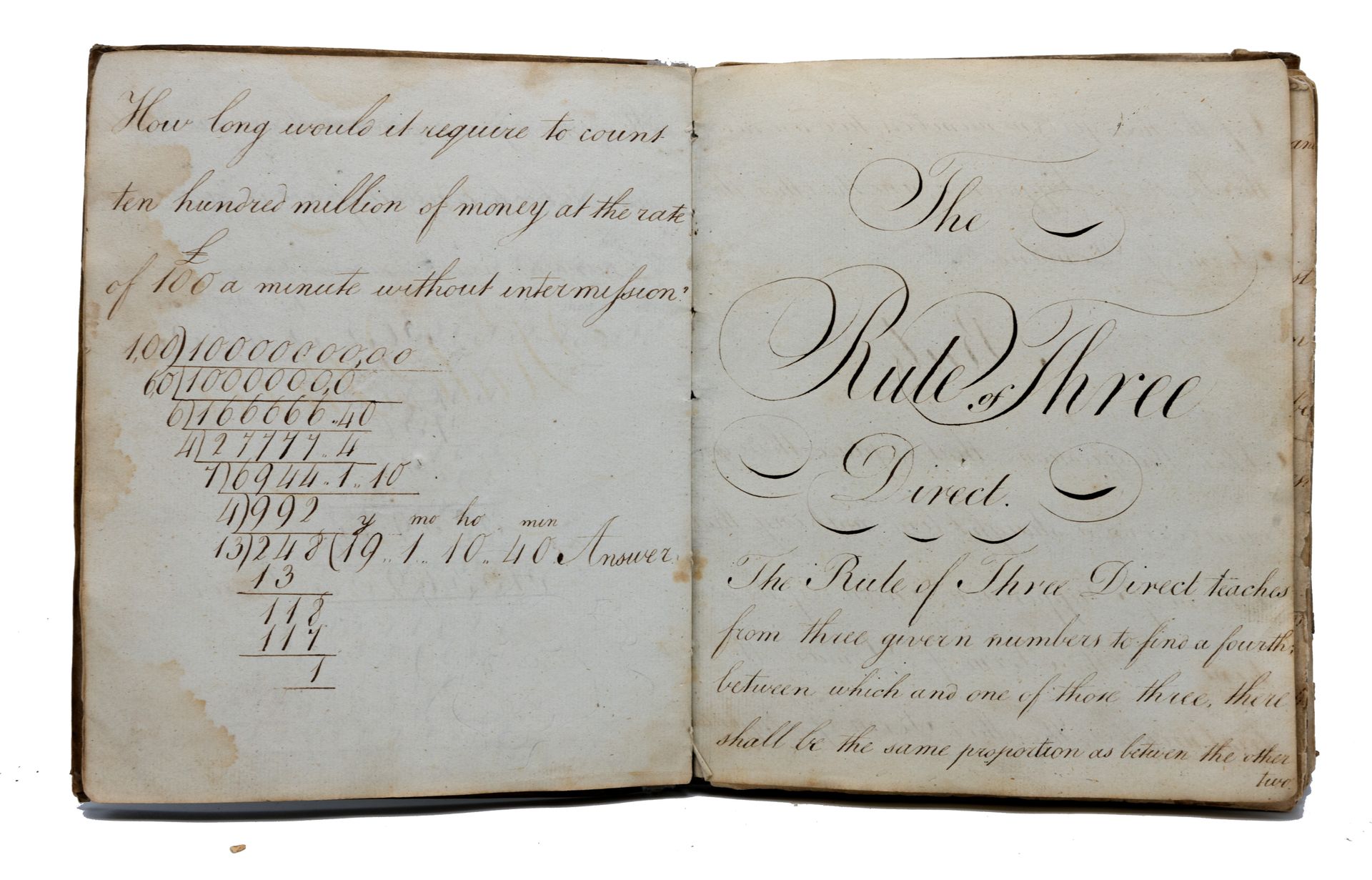
Maths Exercise book (1811)
The museum has a wealth of objects in its collection related to education in Ashby, including this wonderful handwritten maths exercise book from the early 19th century. Not only does this book reveal how mathematical functions of addition, subtraction, multiplication, and division were taught, the lengthy questions also reflect the importance of learning the key skills of reading and writing.
The exercises in this book focus on the practical application of maths, referring to topics such as
trade, labour, and income management which could be of relevance to the future affairs of those from a particular class background. The exercise pictured suggests that the owner of the book came from a privileged family – who else would have to deal with the problem of counting such a vast sum of money?
ARTEFACT OF THE MONTH
August 2025
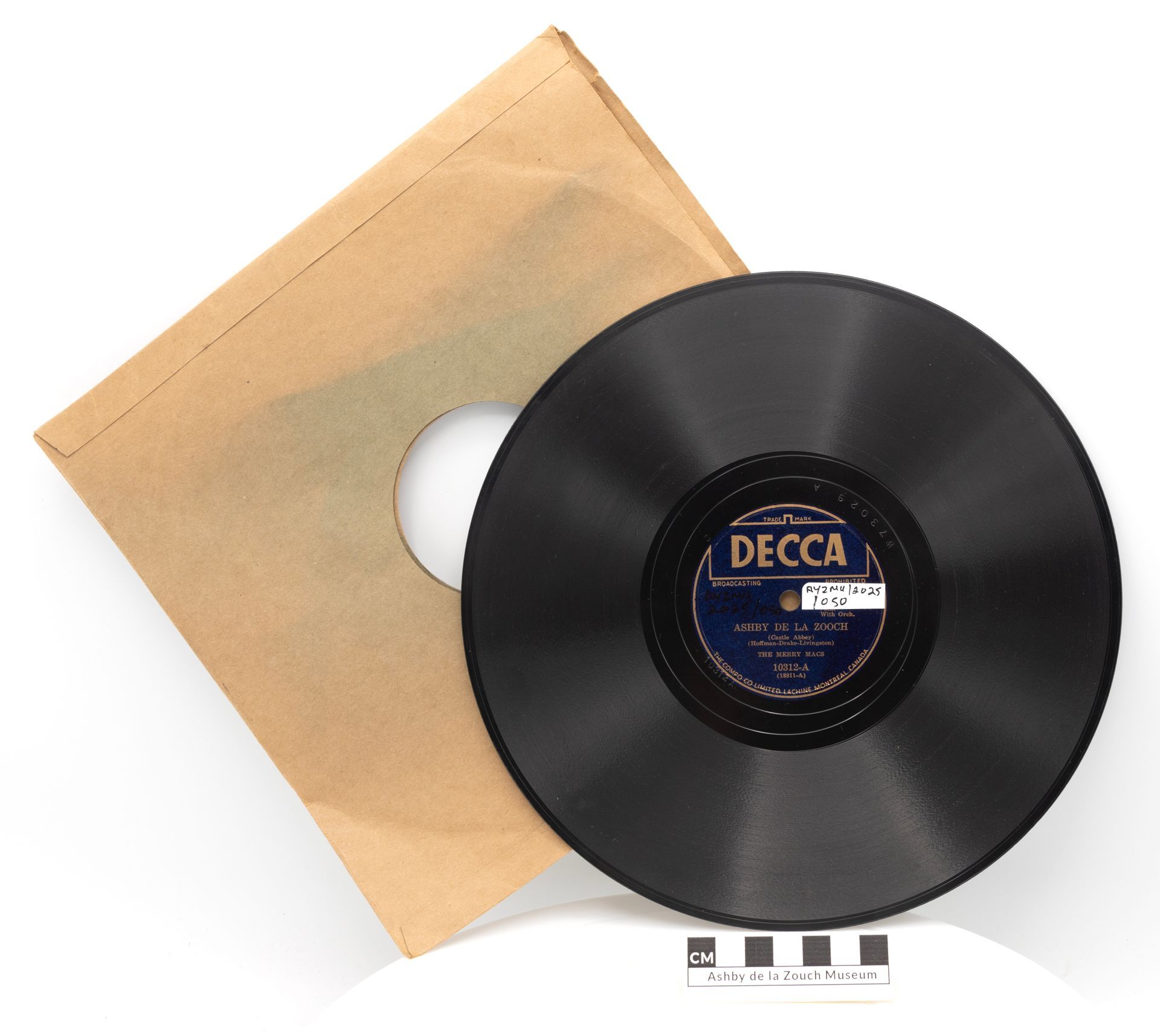
Ashby de la Zooch (Castle Abbey) record performed by The Merry Macs (1946).
If you want a smooch, and be happy as a pooch, go to Ashby De La Zouch by the sea
The Merry Macs, an American vocal harmony group, were one of several artists to record this song (composed by Al Hoffman, Milton Drake and Jerry Livingston) about the delights of a little village in
Leicestershire. Notably these different versions have variations in the title of the song and how ‘Zouch’ is spelt.
Whilst Ashby may not be by the sea as this song ironically suggests (unless the lido counts), you can still enjoy the summer here! Why not pop down to the museum - especially good for those rainy British summer days.